


What is Psoriasis?
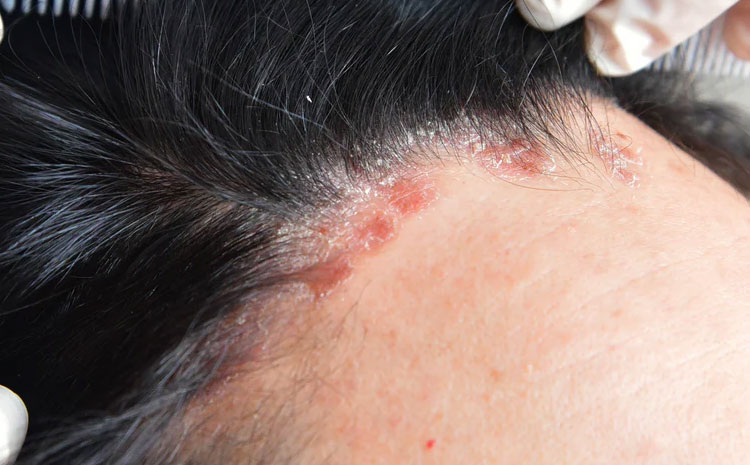
Psoriasis is a skin condition where new skin forms at a faster rate, showing up as red rashes with whitish scales, commonly over elbows, knees, and other body parts. It may sometimes involve nails and joints. It affects up to 2% of the global population. Nowadays it is considered a lifestyle disorder.
It is not a life-threatening disease, but recurrences are common.
It is a disease which is treatable and can be effectively and well controlled.
Can family members or contacts develop Psoriasis?
Psoriasis is not an infectious disease, and cannot be transmitted by contact such as touch, or sharing clothes and food.
Is Psoriasis hereditary?
It is not a rule that children of affected parents will develop psoriasis. However, there is a slightly higher chance of developing psoriasis compared to children of non-affected parents.
Psoriasis can affect anyone, at any age.
Is psoriasis a life-long disease?
Many people who get psoriasis have it for variable duration, with periods of flares and remissions.
It is advisable to visit an IADVL dermatologist.
Can Psoriasis be cured?
Most patients have flares which are triggered during periods of low immunity, and it is best to keep the immune system robust and healthy at all times, with a healthy lifestyle.
Psoriasis is well treatable.
Can psoriasis recur?
Yes, psoriasis can recur in some individuals. Each recurrence should be shown to the treating dermatologist, who will prescribe a suitable treatment regimen after examination.
Can a person with Psoriasis marry?
A person with psoriasis can marry and have children.
What are the lifestyle modifications to be adopted by patients with Psoriasis?
- Regular exercise, getting fresh air and sunlight.
- Dietary modification: Consume fresh seasonal fruits and nutritious, protein-rich food. Avoid high glycaemic index foods and junk, processed items.
- Stop smoking.
- Avoid or limit intake of alcohol.
- Get adequate sleep daily (7–9 hours of continuous sleep) and maintain the body’s circadian rhythm.
- Practice meditation, yoga, or breathing exercises to reduce stress.
- There is no need to supplement with multivitamins, protein powders, or online products without consulting your dermatologist.
- Always keep your doctor informed about treatment progress, and do timely follow-ups; inform when rashes increase.
What factors can aggravate psoriasis?
- Physical trauma (injury, scratches, shaving, tattoo, piercing)
- Mental or physical stress
- Infections (psoriasis can flare up after sore throat, ear infection, bronchitis, viral flu, influenza, or COVID)
- Certain medications (Always take the opinion of your dermatologist before starting any medications)
- Drinking alcohol frequently or in excess
- Smoking
- Dry and cold weather or seasonal variations
- Low or weakened immunity and poor diet or lifestyle habits
How can one cope with psoriasis?
- Learning (and avoiding) what triggers your psoriasis.
- Sticking to a good psoriasis skin care routine. Always consult your dermatologist on appropriate use of emollients and medications.
- Living a healthy lifestyle.
- Using medication when necessary.
- If joints are affected, inform your treating doctor. Multi-disciplinary care with rheumatologists may be required.
How does Psoriasis look like? Which areas of the body are affected by Psoriasis?
There are different types of psoriasis. Clinical picture varies depending on the body part involved, severity, and subtype of psoriasis.
Psoriasis presents as well-defined, raised, scaly, reddish skin rashes mainly on arms, legs, palms, soles, and scalp.
If psoriasis affects the hands and feet, painful fissures (cracks) can develop. This can interfere with daily activities and cause emotional distress. Walking may be painful if soles are involved. Severe psoriasis can be painful and distressing.
Psoriasis may involve any site of the skin. Patients may have a single lesion or widespread involvement.
Some patients may have joint involvement with pain, stiffness, and swelling, particularly in the morning. Joints of the hands are commonly affected.
What should one do if he/she gets Psoriasis?
If one gets psoriasis, he/she must consult a dermatologist.
- Do not self-medicate or seek treatment from untrained physicians.
- Improper or wrong treatments may make psoriasis unstable and delay recovery.
Are there any tests to confirm Psoriasis?
Dermatologists help in diagnosis or ruling out psoriasis. No laboratory tests are usually needed for diagnosis. A skin biopsy of a small sample of tissue may be needed to confirm the diagnosis in doubtful cases.
Blood tests may be recommended to check for co-existing diseases or when systemic medications are indicated.
Which diseases can be associated with Psoriasis?
Psoriasis, particularly moderate to severe forms, is associated with an increased risk of anxiety, depression, and harmful alcohol use.
It can also be associated with diabetes, obesity, high cholesterol, and hypertension.
Is it necessary to treat psoriasis?
Early and timely interventions are needed to:
- Achieve remissions, improving symptoms and quality of life.
- Halt the progression of the condition.
- Reduce symptoms such as itching and pain.
- Lessen the effects of related health conditions such as joint and heart disease, insulin resistance.
How can Psoriasis be treated?
Keeping psoriasis under control tends to be an ongoing process. It requires appointments with your dermatologist, following a treatment plan, and identifying triggers to avoid them. Treatment schedules vary for different types of psoriasis and disease severity.
There are different therapies depending on severity:
- Creams and ointments for limited disease.
- Systemic treatment (oral or injectable medications) for severe disease or disease with co-morbidities.
While there is no cure for psoriasis, there are more treatment choices than ever before. Several new treatments have become available in recent years. Researchers continue to study and improve treatment options.
What will happen after treatment of psoriasis?
Psoriasis is an unpredictable disease. It is impossible to know who will have remission and how long it will last.
- One may have no psoriasis symptoms (remission).
- Sometimes, psoriasis may return, looking and feeling much like before (relapse).
- Occasionally, psoriasis may return and be worse than before (rebound).
Do not be alarmed if there is relapse or rebound — it is a phase and symptoms will settle with appropriate care and treatment.
Since Psoriasis is a chronic condition, some patients may wish to stop treatment on their own. Always talk with your dermatologist before stopping treatment.
Your dermatologist can advise whether to stop treatment abruptly or gradually. Sometimes, the best approach is to switch to another therapy slowly.
Disclaimer: This article is only for general patient information and is not intended for self-medication. There is no legal liability of IADVL arising out of any adverse consequence to the patient. Subsequent to its use for self-treatment of the disease, images are adjusted for depiction of the condition and are not to be used for any other purpose.
